


Services / No-Prep Veneers

No-Prep Veneers in Chicago

A more conservative veneer option for teeth that have the right starting shape and position.

No-prep and minimal-prep veneers can change the visible shape, proportions, color, and spacing of selected teeth while preserving more natural enamel than traditional veneer treatment. The important part is candidacy. At LPS Dental, we first look at your tooth position, enamel, bite, gumline, and the change you want to make before deciding whether adding a thin ceramic restoration without significant tooth reduction will create a natural result.

640+ Reviews

4.9 Overall Rating

Since 1999

Serving Chicago

3 Locations

Across Chicago

Trusted by Chicago — our associations, accreditations and partners.

What We Offer

Our Chicago No-Prep Veneers Services

No-prep and minimal-prep veneers can change the visible shape, proportions, color, and spacing of selected teeth while preserving more natural enamel than traditional veneer treatment. The important part is candidacy.

Small or Narrow Teeth
01

Small or Narrow Teeth

A naturally narrow or undersized tooth may already have room for additional ceramic.

More about this service

A naturally narrow or undersized tooth may already have room for additional ceramic. A veneer can increase its visible width or improve its proportions without requiring the same amount of reduction that another tooth might need.


Learn More
Small Spaces Between Teeth
02

Small Spaces Between Teeth

Selected gaps may be reduced by carefully increasing the width of neighboring teeth.

More about this service

Selected gaps may be reduced by carefully increasing the width of neighboring teeth. The change still needs to fit the overall proportions of the smile. If tooth position is the primary cause of the spacing, orthodontic treatment may deserve consideration first.

Learn More
Minor Shape Differences
03

Minor Shape Differences

A tooth that appears slightly short, tapered, or uneven compared with neighboring teeth may sometimes be reshaped visually…

More about this service

A tooth that appears slightly short, tapered, or uneven compared with neighboring teeth may sometimes be reshaped visually with a thin veneer.

Learn More
Mild Chips or Edge Wear
04

Mild Chips or Edge Wear

Selected areas of minor wear or chipping can sometimes be incorporated into a minimal-prep veneer plan.

More about this service

Selected areas of minor wear or chipping can sometimes be incorporated into a minimal-prep veneer plan. For smaller defects, composite bonding may be an even more conservative option.

Learn More
Selected Color Concerns
05

Selected Color Concerns

Ceramic can change the visible color of a tooth, but very thin restorations have limits in how much underlying discoloration they can mask.

More about this service

Ceramic can change the visible color of a tooth, but very thin restorations have limits in how much underlying discoloration they can mask. The more significant the color change, the more important material thickness and preparation become.

Learn More
Improving Several Small Concerns Together
06

Improving Several Small Concerns Together

Some patients have healthy teeth but dislike a combination of small gaps, short teeth, mild discoloration, or uneven proportions.

More about this service

Some patients have healthy teeth but dislike a combination of small gaps, short teeth, mild discoloration, or uneven proportions. A minimal-prep approach may be useful when those teeth have enough room for the ceramic to be added naturally.

Learn More

Comfort, Expertise, And Trust

Why Choose LPS Dental For No-Prep Veneers?

Patient story from Lincoln Park Smiles

01We Listen Before We RecommendTell us what you notice.

Tell us what you notice. The recommendation comes after we understand the problem.

02Natural Results MatterTreatment should look like your smile, not a one-size-fits-all result.

Treatment should look like your smile, not a one-size-fits-all result.

03We Look Beyond AppearanceWe evaluate the health of the teeth and gums, existing restorations, tooth position, and bite before treatment.

We evaluate the health of the teeth and gums, existing restorations, tooth position, and bite before treatment.

04You Can See and Understand the PlanWe explain why something is recommended, what alternatives exist, and what treatment involves before you decide.

We explain why something is recommended, what alternatives exist, and what treatment involves before you decide.

How It Works

How No-Prep Veneers Work at LPS Dental

  1. 01

    Start With the Smile You Have

    Tell us what you would like to change.

    Read the full step

    Tell us what you would like to change. Maybe you have always disliked a small gap. Perhaps one tooth seems shorter than the rest. Or several teeth appear too narrow when you smile. We begin with the concern rather than assuming veneers are already the answer.

  2. 02

    Evaluate Tooth Position and Available Space

    This step is especially important for no-prep treatment.

    Read the full step

    This step is especially important for no-prep treatment. We look at whether adding ceramic can improve the smile without making the teeth overly prominent or thick.

  3. 03

    Check the Teeth, Gums and Bite

    The teeth need to be healthy enough for cosmetic treatment.

    Read the full step

    The teeth need to be healthy enough for cosmetic treatment. We evaluate enamel, existing restorations, decay, gum health, tooth wear, and the way the upper and lower teeth meet.

  4. 04

    Compare the Alternatives

    Depending on what we find, we may also discuss: * Traditional porcelain veneers * Composite bonding * Teeth…

    Read the full step

    Depending on what we find, we may also discuss: * Traditional porcelain veneers * Composite bonding * Teeth whitening * Invisalign * A combination of treatments If no-prep veneers are not the right choice, we will tell you.

  5. 05

    Plan the Final Shape

    We consider tooth width, length, symmetry, smile line, surrounding teeth, facial proportions, and how much tooth shows when…

    Read the full step

    We consider tooth width, length, symmetry, smile line, surrounding teeth, facial proportions, and how much tooth shows when you smile and speak. The goal is to determine what needs to be added before ceramic is fabricated.

  6. 06

    Use Little or No Preparation Where Appropriate

    In true no-prep cases, ceramic may be planned without meaningful enamel reduction.

    Read the full step

    In true no-prep cases, ceramic may be planned without meaningful enamel reduction. Some teeth may benefit from small selective adjustments. We will explain what preparation, if any, is expected before treatment begins.

  7. 07

    Capture the Teeth Digitally

    Digital scans or other dental records provide the information needed to design and fabricate the restorations.

  8. 08

    Evaluate the Veneers

    Fit, contour, proportions, shade, margins, and the relationship with surrounding teeth all need to be evaluated before final bonding.

    Read the full step

    Fit, contour, proportions, shade, margins, and the relationship with surrounding teeth all need to be evaluated before final bonding. You should also have the opportunity to look carefully at the result.

  9. 09

    Bond the Veneers

    Once the restorations are approved, the teeth and ceramic are prepared for bonding.

    Read the full step

    Once the restorations are approved, the teeth and ceramic are prepared for bonding. The bite is checked afterward to make sure the restorations are not receiving inappropriate contact.

  10. 10

    Maintain the Teeth and Veneers

    The restorations still require normal dental care.

    Read the full step

    The restorations still require normal dental care. The gums should remain healthy and the natural tooth around each veneer must be kept clean. We monitor the veneers, margins, and bite during future dental visits.

LPS Dental Chicago dentists

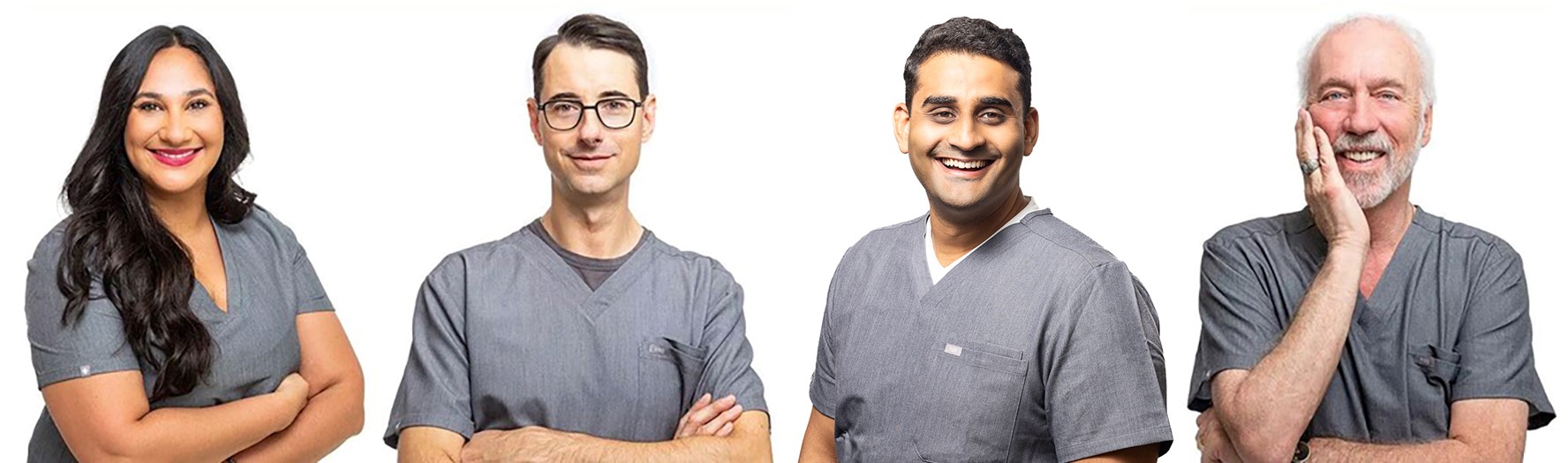
Meet The LPS Dental Team

Top Chicago Dentists

LPS Dental's roots in Chicago go back to 1999, when Dr. Jack Manikowski opened Lincoln Park Smiles.

Read more about the team

Today, LPS Dental has three Chicago offices and a team whose experience extends across cosmetic, restorative, implant, periodontal, prosthodontic, and general dentistry.

  • Treatment planning that considers appearance, tooth structure, function, and long-term health together.

  • Dr. Jack Manikowski is a member of the American Academy of Cosmetic Dentistry.

  • Digital scanning and planning tools help us evaluate and communicate proposed treatment.

Meet Our Dentists
Real Patients, Real Results

People Love LPS Dental

Questions & Answers

No-Prep Veneer FAQ

It is normal to have questions before treatment. Here are some of the things patients often want to understand first.

No-prep veneers are thin cosmetic restorations designed to be bonded to teeth with little or no removal of natural enamel in appropriate cases. They are most suitable when the tooth already has enough space for ceramic to be added without creating excessive bulk.

They can be. Some cases require essentially no tooth reduction. Others may benefit from small selective adjustments to enamel for better contour, fit, margins, or appearance. We explain the expected preparation before treatment.

Minimal-prep veneers use a conservative amount of tooth preparation rather than insisting on either completely untouched enamel or a conventional full veneer preparation. The terms no-prep and minimal-prep are sometimes used together because the amount of preparation varies according to the tooth.

No-prep veneers can be made from ceramic materials, but the term describes the preparation approach, not simply the material. Traditional porcelain veneers commonly involve more deliberate enamel preparation.

Good candidates often have relatively small, narrow, or slightly inward-positioned teeth and want modest changes in shape, spacing, or proportions. Healthy enamel, healthy gums, and an appropriate bite are also important.

No-prep treatment may be unsuitable when teeth already project outward, are significantly crowded, require substantial color masking, have major structural damage, or would become too bulky if ceramic were simply added.

They can be particularly useful for selected undersized or narrow teeth because the restoration adds volume rather than requiring significant reduction first.

Small spaces may sometimes be closed by increasing the width of adjacent teeth. Larger gaps or spaces caused mainly by tooth position may be better treated orthodontically.

Start Your Next Visit Today

Visit us in Lincoln Park, Downtown Chicago, or Norwood Park. The first appointment should leave you with a clearer picture of your dental health and what, if anything, needs to happen next.

  • Lincoln Park1701 N Sheffield Ave #101, Chicago, IL 60614312-337-1665
  • Downtown Chicago Loop30 N Michigan Ave #1520, Chicago, IL 60602312-236-9325
  • Norwood Park6315 N Milwaukee Ave #2, Chicago, IL 60646773-774-1493