


Services / Cavity Prevention & Treatment

Cavity Prevention & Treatment in Chicago

The earlier tooth decay is found, the more of your natural tooth we may be able to preserve.

Cavities do not always hurt when they begin. At LPS Dental, we look for early signs of tooth decay, help patients reduce the factors causing it, and treat cavities conservatively when a tooth already needs repair. From preventive fluoride and dental exams to tooth-colored fillings, cavity care is available at our Lincoln Park, Downtown Chicago, and Norwood Park offices.

640+ Reviews

4.9 Overall Rating

Since 1999

Serving Chicago

3 Locations

Across Chicago

Trusted by Chicago — our associations, accreditations and partners.

What We Offer

Our Chicago Cavity Prevention & Treatment Services

Cavities do not always hurt when they begin. At LPS Dental, we look for early signs of tooth decay, help patients reduce the factors causing it, and treat cavities conservatively when a tooth already needs repair.

Dental Exams & Early Detection
01

Dental Exams & Early Detection

Many cavities are discovered before the patient feels anything.

More about this service

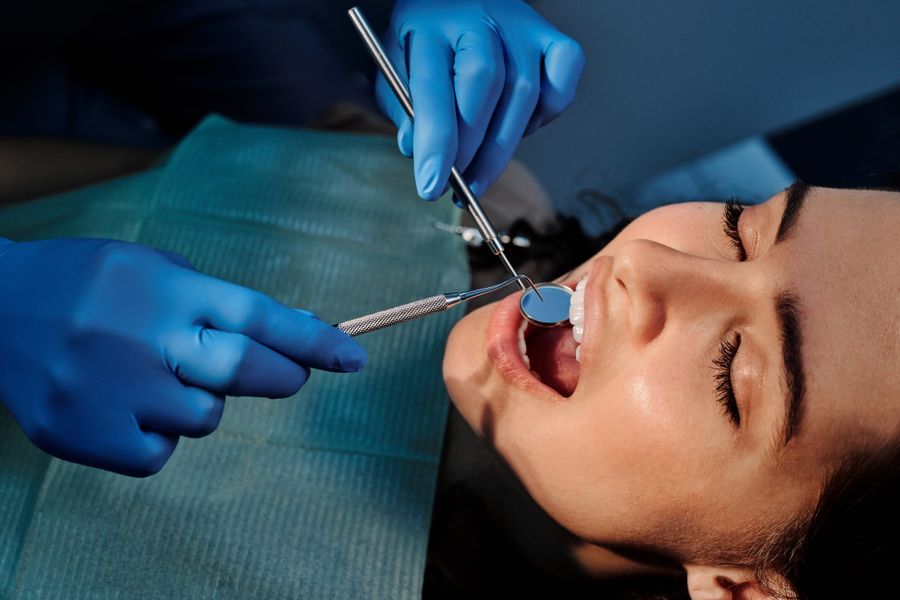
Many cavities are discovered before the patient feels anything. During a dental exam, we look for changes in the enamel, areas around older fillings and crowns, and other signs that decay may be developing. Dental X-rays may also help us identify cavities in places that are difficult to see directly, particularly between teeth.

Learn More
Fluoride & Early Tooth Decay
02

Fluoride & Early Tooth Decay

Very early decay may begin as mineral loss from the enamel before an actual hole develops.

More about this service

Very early decay may begin as mineral loss from the enamel before an actual hole develops. In appropriate situations, fluoride and changes in home care can help strengthen the enamel and stop or reverse this early stage of decay. Once tooth structure has broken down into an established cavity, however, preventive care alone may no longer be enough.

Learn More
Dental Sealants
03

Dental Sealants

The chewing surfaces of back teeth contain small grooves where food and plaque can collect.

More about this service

The chewing surfaces of back teeth contain small grooves where food and plaque can collect. Dental sealants create a protective coating over these vulnerable areas and can be useful for patients whose molars are at greater risk of decay. Whether sealants make sense depends on the teeth and the patient's cavity risk.

Learn More
Tooth-Colored Fillings
04

Tooth-Colored Fillings

When decay has created a cavity, the damaged portion of the tooth needs to be addressed.

More about this service

When decay has created a cavity, the damaged portion of the tooth needs to be addressed. For many small and moderate cavities, tooth-colored composite can be used to restore the area while blending with the surrounding enamel. Our goal is to remove what is unhealthy while preserving as much sound tooth structure as possible.

Learn More
Decay Around Older Dental Work
05

Decay Around Older Dental Work

A filling or crown can look fine from the outside while changes develop around its edges.

More about this service

A filling or crown can look fine from the outside while changes develop around its edges. Over time, restorations can wear, fracture, or lose their seal. Plaque and bacteria may then gain access to areas that are difficult to clean. Routine exams help us monitor older dental work and identify recurrent decay before more of the tooth becomes involved.

Learn More
Larger Cavities & Weakened Teeth
06

Larger Cavities & Weakened Teeth

Not every cavity can be restored with a small filling.

More about this service

Not every cavity can be restored with a small filling. If decay has removed a substantial amount of tooth structure, the remaining tooth may need additional protection. Depending on the situation, treatment could involve a larger restoration or dental crown. If decay reaches the nerve inside the tooth, root canal treatment may also need to be considered. The treatment becomes more involved as the damage becomes more extensive, which is another reason early diagnosis matters.

Learn More

Comfort, Expertise, And Trust

Why Choose LPS Dental For Cavity Prevention & Treatment?

Patient story from Lincoln Park Smiles

01We Listen Before We RecommendTell us what you notice.

Tell us what you notice. The recommendation comes after we understand the problem.

02Natural Results MatterTreatment should look like your smile, not a one-size-fits-all result.

Treatment should look like your smile, not a one-size-fits-all result.

03We Look Beyond AppearanceWe evaluate the health of the teeth and gums, existing restorations, tooth position, and bite before treatment.

We evaluate the health of the teeth and gums, existing restorations, tooth position, and bite before treatment.

04You Can See and Understand the PlanWe explain why something is recommended, what alternatives exist, and what treatment involves before you decide.

We explain why something is recommended, what alternatives exist, and what treatment involves before you decide.

How It Works

How We Approach Cavities at LPS Dental

  1. 01

    Find Out How Far the Decay Has Progressed

    We examine the tooth and use dental imaging when it provides useful additional information.

    Read the full step

    We examine the tooth and use dental imaging when it provides useful additional information. The important question is not simply whether decay exists. It is how much tooth structure has been affected and whether a true cavity has formed.

  2. 02

    Decide Whether the Tooth Needs Treatment

    If the change is still limited to an early stage of enamel demineralization, preventive measures and monitoring may…

    Read the full step

    If the change is still limited to an early stage of enamel demineralization, preventive measures and monitoring may sometimes be appropriate. If the tooth structure has already broken down, the cavity generally needs to be restored. We will explain which situation applies to you.

  3. 03

    Remove the Damaged Tooth Structure

    When a filling is needed, the decayed portion of the tooth is removed.

    Read the full step

    When a filling is needed, the decayed portion of the tooth is removed. The goal is to clear away unhealthy tissue while keeping as much sound natural tooth as practical.

  4. 04

    Restore the Tooth

    For many cavities, tooth-colored composite material can be placed and shaped to restore the missing portion.

    Read the full step

    For many cavities, tooth-colored composite material can be placed and shaped to restore the missing portion. Larger areas of damage may require a different type of restoration to provide adequate support.

  5. 05

    Make a Plan to Reduce Future Cavities

    Once the tooth is repaired, we look ahead.

    Read the full step

    Once the tooth is repaired, we look ahead. That could mean adjusting home care, using fluoride, addressing dry mouth, changing how frequently sugar or acidic drinks contact the teeth, or simply monitoring certain areas more closely.

LPS Dental Chicago dentists

Meet The LPS Dental Team

Top Chicago Dentists

LPS Dental's roots in Chicago go back to 1999, when Dr. Jack Manikowski opened Lincoln Park Smiles.

Read more about the team

Today, LPS Dental has three Chicago offices and a team whose experience extends across cosmetic, restorative, implant, periodontal, prosthodontic, and general dentistry.

  • Treatment planning that considers appearance, tooth structure, function, and long-term health together.

  • Dr. Jack Manikowski is a member of the American Academy of Cosmetic Dentistry.

  • Digital scanning and planning tools help us evaluate and communicate proposed treatment.

Meet Our Dentists
Real Patients, Real Results

People Love LPS Dental

Questions & Answers

Cavity Prevention & Treatment FAQ

It is normal to have questions before treatment. Here are some of the things patients often want to understand first.

A cavity is an area of tooth structure that has been damaged by tooth decay. Decay begins when acids produced by bacteria repeatedly remove minerals from the tooth surface. If this process continues, the enamel can eventually break down and form a hole in the tooth.

Very early tooth decay can sometimes be stopped or reversed before a physical hole has formed. Fluoride, improved oral hygiene, and reducing the factors driving the decay may help the enamel regain minerals. Once tooth structure has broken down into an established cavity, a filling or another restorative treatment is generally needed.

Not every early area of demineralization automatically requires a filling. The decision depends on whether the surface of the tooth is still intact, whether the decay appears active, how far it has progressed, and the patient's overall cavity risk. Your dentist can determine whether an area should be treated, monitored, or managed preventively.

Yes. Many cavities do not cause pain in their early stages. Sensitivity and discomfort become more likely as decay progresses deeper into the tooth, but the absence of pain does not necessarily mean a tooth is healthy.

Dentists use a combination of visual examination, clinical findings, dental history, and X-rays when appropriate. X-rays are particularly useful for detecting certain cavities between teeth or underneath areas that cannot be evaluated directly.

Some cavities cause no symptoms. Others may cause sensitivity to cold, hot, or sweet foods, discomfort while chewing, food trapping in one area, or eventually a persistent toothache. The symptoms vary according to the tooth and how far the decay has progressed.

The dentist removes the decayed portion of the tooth and restores the resulting area with an appropriate filling material. LPS Dental commonly uses tooth-colored composite restorations when appropriate. The exact procedure depends on the size and location of the cavity.

Composite resin is widely used for small and moderate dental restorations and can be matched to the natural tooth color. Whether it is the best material for a particular cavity depends on the size and location of the restoration, remaining tooth structure, and the forces placed on the tooth.

Start Your Next Visit Today

Visit us in Lincoln Park, Downtown Chicago, or Norwood Park. The first appointment should leave you with a clearer picture of your dental health and what, if anything, needs to happen next.

  • Lincoln Park1701 N Sheffield Ave #101, Chicago, IL 60614312-337-1665
  • Downtown Chicago Loop30 N Michigan Ave #1520, Chicago, IL 60602312-236-9325
  • Norwood Park6315 N Milwaukee Ave #2, Chicago, IL 60646773-774-1493