
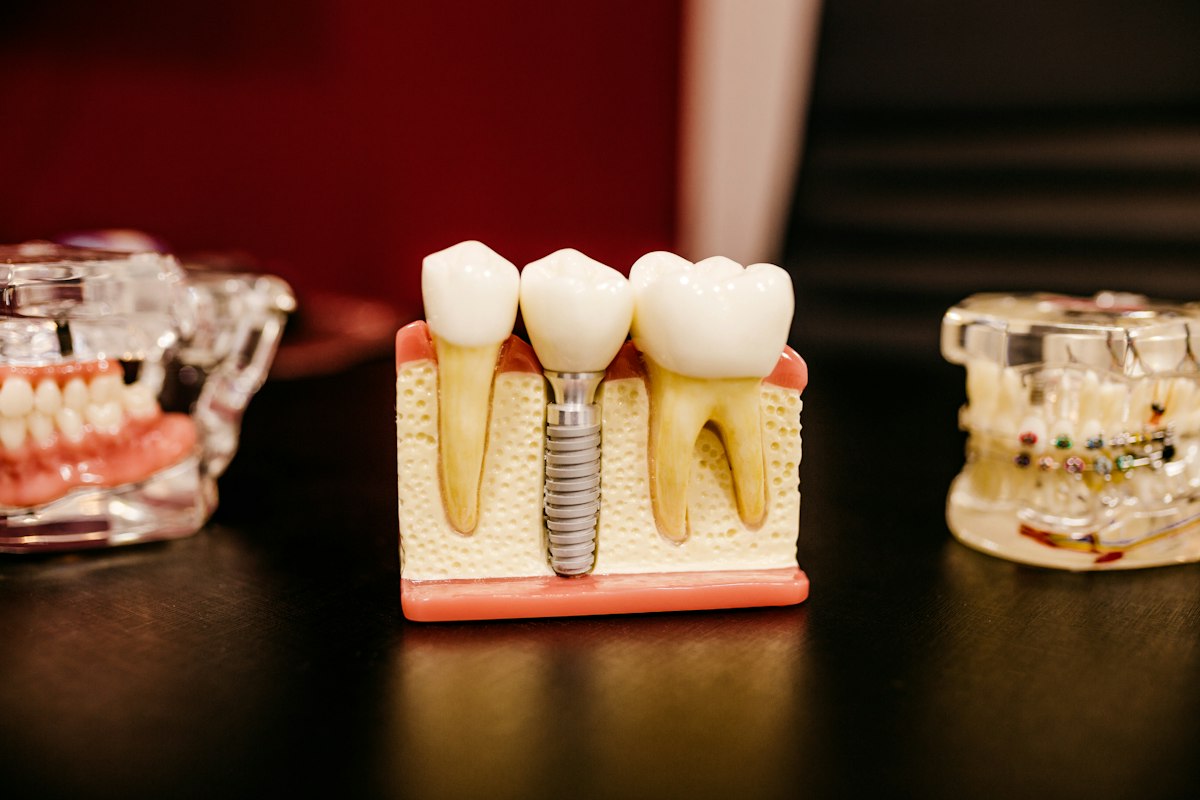


Services / Dental Bridges

Dental Bridges in Chicago

Replace a missing tooth with a restoration designed to fit the teeth around it.

A dental bridge can replace one or more missing teeth with a restoration that stays in place rather than being removed each day. At LPS Dental, we look at the condition of the neighboring teeth, your bite, the missing space, your gum health, and whether a bridge or dental implant makes more sense before recommending treatment. Dental bridge consultations are available through our Lincoln Park, Downtown Chicago, and Norwood Park offices.

640+ Reviews

4.9 Overall Rating

Since 1999

Serving Chicago

3 Locations

Across Chicago

Trusted by Chicago — our associations, accreditations and partners.

What We Offer

Our Chicago Dental Bridges Services

A dental bridge can replace one or more missing teeth with a restoration that stays in place rather than being removed each day. At LPS Dental, we look at the condition of the neighboring teeth, your bite, the missing space, your gum health, and whether a bridge or dental implant makes more sense before recommending treatment.

One Missing Tooth
01

One Missing Tooth

A traditional dental bridge can replace a single missing tooth by using the teeth on either side of the space for support.

More about this service

A traditional dental bridge can replace a single missing tooth by using the teeth on either side of the space for support. Those supporting teeth are prepared for crowns, and the replacement tooth is connected between them as part of one restoration.
Learn More
Several Adjacent Missing Teeth
02

Several Adjacent Missing Teeth

A bridge can sometimes replace more than one neighboring missing tooth.

More about this service

A bridge can sometimes replace more than one neighboring missing tooth. The number of missing teeth does not automatically determine whether a bridge is appropriate. The strength and position of the supporting teeth, length of the span, bite forces, and ability to maintain the restoration all matter.

Learn More
Neighboring Teeth Already Need Crowns
03

Neighboring Teeth Already Need Crowns

This is an important scenario.

More about this service

This is an important scenario. If the teeth beside a missing space are healthy and untouched, preparing them for a bridge deserves careful consideration. If those same teeth already have large restorations, fractures, or otherwise need crowns, incorporating them into a bridge may make more sense.

Learn More
Replacing an Older Bridge
04

Replacing an Older Bridge

Dental bridges can wear, fracture, loosen, develop decay around their supporting teeth, or eventually stop fitting as they once did.

More about this service

Dental bridges can wear, fracture, loosen, develop decay around their supporting teeth, or eventually stop fitting as they once did. An older bridge should be evaluated along with the teeth underneath it before deciding whether it can be repaired, recemented, or needs replacement.

Learn More
When Implant Surgery Is Not the Preferred Option
05

When Implant Surgery Is Not the Preferred Option

An implant is a strong option for many missing teeth, but not every patient wants or is suited to implant surgery.

More about this service

An implant is a strong option for many missing teeth, but not every patient wants or is suited to implant surgery. Medical health, bone availability, treatment time, cost, anatomy, and personal preference can all influence the decision. A conventional bridge may still be a very reasonable solution.

Learn More
Implant-Supported Bridges
06

Implant-Supported Bridges

When several teeth are missing, dental implants can sometimes support a bridge without relying on natural teeth at both ends.

More about this service

When several teeth are missing, dental implants can sometimes support a bridge without relying on natural teeth at both ends. This is a different treatment from a traditional tooth-supported bridge and requires implant-specific planning.

Learn More

Comfort, Expertise, And Trust

Why Choose LPS Dental For Dental Bridges?

Patient story from Lincoln Park Smiles

01We Listen Before We RecommendTell us what you notice.

Tell us what you notice. The recommendation comes after we understand the problem.

02Natural Results MatterTreatment should look like your smile, not a one-size-fits-all result.

Treatment should look like your smile, not a one-size-fits-all result.

03We Look Beyond AppearanceWe evaluate the health of the teeth and gums, existing restorations, tooth position, and bite before treatment.

We evaluate the health of the teeth and gums, existing restorations, tooth position, and bite before treatment.

04You Can See and Understand the PlanWe explain why something is recommended, what alternatives exist, and what treatment involves before you decide.

We explain why something is recommended, what alternatives exist, and what treatment involves before you decide.

How It Works

How Does a Dental Bridge Replace a Missing Tooth?

  1. 01

    Evaluate the Missing Space

    We first examine the teeth beside the space, the opposing teeth, gums, bite, and available bone.

    Read the full step

    We first examine the teeth beside the space, the opposing teeth, gums, bite, and available bone. Dental X-rays may be used to evaluate the supporting teeth and roots. If either neighboring tooth has a questionable prognosis, we need to know that before building a bridge on top of it.

  2. 02

    Compare the Replacement Options

    Before preparing healthy teeth, we discuss whether a bridge is genuinely the right choice.

    Read the full step

    Before preparing healthy teeth, we discuss whether a bridge is genuinely the right choice. That may include comparing the bridge with a dental implant or removable partial denture. The condition of the teeth beside the space often plays a major role in that decision.

  3. 03

    Prepare the Supporting Teeth

    For a conventional bridge, the supporting teeth are reshaped to create room for the crowns that will hold the restoration.

    Read the full step

    For a conventional bridge, the supporting teeth are reshaped to create room for the crowns that will hold the restoration. Local anesthesia is used as appropriate. How much preparation is necessary depends on the condition of the teeth and the restorative material being used.

  4. 04

    Scan the Teeth and Bite

    Digital scanning can record the prepared teeth, missing space, surrounding teeth, and bite.

    Read the full step

    Digital scanning can record the prepared teeth, missing space, surrounding teeth, and bite. That information is used to design a bridge that fits the area accurately.

  5. 05

    Protect the Teeth While the Final Bridge Is Made

    When the definitive restoration is being fabricated outside the appointment, a temporary bridge may be used to protect…

    Read the full step

    When the definitive restoration is being fabricated outside the appointment, a temporary bridge may be used to protect the prepared teeth and maintain appearance and function. Temporary restorations are not as strong as the final bridge, so some additional care may be needed during this stage.

  6. 06

    Fit the Final Bridge

    When the final restoration is ready, we evaluate its fit on the supporting teeth.

    Read the full step

    When the final restoration is ready, we evaluate its fit on the supporting teeth. We also check the contacts, bite, contours, appearance, and relationship with the gums. The replacement tooth should look appropriate in the space without making the area unnecessarily difficult to clean.

  7. 07

    Secure the Bridge

    Once the fit and bite are satisfactory, the bridge is cemented or bonded according to the restorative design.

    Read the full step

    Once the fit and bite are satisfactory, the bridge is cemented or bonded according to the restorative design. We then show you how to clean around and underneath it.

LPS Dental Chicago dentists

Meet The LPS Dental Team

Top Chicago Dentists

LPS Dental's roots in Chicago go back to 1999, when Dr. Jack Manikowski opened Lincoln Park Smiles.

Read more about the team

Today, LPS Dental has three Chicago offices and a team whose experience extends across cosmetic, restorative, implant, periodontal, prosthodontic, and general dentistry.

  • Treatment planning that considers appearance, tooth structure, function, and long-term health together.

  • Dr. Jack Manikowski is a member of the American Academy of Cosmetic Dentistry.

  • Digital scanning and planning tools help us evaluate and communicate proposed treatment.

Meet Our Dentists
Real Patients, Real Results

People Love LPS Dental

Questions & Answers

Dental Bridge FAQ

It is normal to have questions before treatment. Here are some of the things patients often want to understand first.

A dental bridge is a restoration used to replace one or more missing teeth. A conventional bridge commonly uses crowns placed on teeth beside the missing space to support one or more artificial replacement teeth between them. The restoration remains fixed in the mouth rather than being removed by the patient.

Yes. Dental implants have created additional options for replacing missing teeth, but fixed bridges remain an established treatment. A bridge may be particularly reasonable when the neighboring teeth already need crowns, when implant treatment is not desired or appropriate, or when other clinical factors favor a tooth-supported restoration.

A pontic is the artificial tooth portion of a dental bridge that replaces the missing natural tooth. It is connected to the crowns or other retainers supporting the bridge.

Abutment teeth are the natural teeth used to support a conventional dental bridge. Because these teeth carry the bridge, their structural and periodontal health needs to be evaluated carefully before treatment.

A bridge can sometimes replace more than one adjacent missing tooth. There is no universal number that works for every patient. The length of the missing space, strength of the supporting teeth, bite forces, bridge design, and location all influence what is reasonable.

For a conventional crown-supported bridge, the neighboring supporting teeth generally need to be reshaped to make room for the crowns that hold the bridge. Because that process removes tooth structure, the condition of those teeth is an important consideration when comparing a bridge with a dental implant.

Local anesthesia is typically used when the supporting teeth are being prepared. Some temporary sensitivity can occur afterward, especially while wearing a temporary restoration. Tell your dentist if discomfort becomes severe, persists, or worsens.

The timeline varies according to the bridge design, condition of the supporting teeth, and how the definitive restoration is fabricated. Conventional treatment commonly involves preparation and scanning or impressions followed by fabrication of the final bridge. Additional treatment may extend the timeline if the supporting teeth or gums need care first.

Start Your Next Visit Today

Visit us in Lincoln Park, Downtown Chicago, or Norwood Park. The first appointment should leave you with a clearer picture of your dental health and what, if anything, needs to happen next.

  • Lincoln Park1701 N Sheffield Ave #101, Chicago, IL 60614312-337-1665
  • Downtown Chicago Loop30 N Michigan Ave #1520, Chicago, IL 60602312-236-9325
  • Norwood Park6315 N Milwaukee Ave #2, Chicago, IL 60646773-774-1493