


Services / Bonded White Fillings

Tooth-Colored Fillings in Chicago

Repair the damaged part of the tooth without making the restoration the first thing people see.

Tooth-colored composite fillings are used to repair cavities and selected areas of minor tooth damage while blending with the surrounding enamel. At LPS Dental, we take a conservative approach to fillings, removing what needs treatment while preserving healthy tooth structure whenever possible. Composite fillings are available at our Lincoln Park, Downtown Chicago, and Norwood Park offices.

640+ Reviews

4.9 Overall Rating

Since 1999

Serving Chicago

3 Locations

Across Chicago

Trusted by Chicago — our associations, accreditations and partners.

What We Offer

Our Chicago Bonded White Fillings Services

Tooth-colored composite fillings are used to repair cavities and selected areas of minor tooth damage while blending with the surrounding enamel. At LPS Dental, we take a conservative approach to fillings, removing what needs treatment while preserving healthy tooth structure whenever possible.

Cavities
01

Cavities

Composite fillings are commonly used when tooth decay has created a small or moderate cavity.

More about this service

Composite fillings are commonly used when tooth decay has created a small or moderate cavity. The damaged portion of the tooth is removed, and tooth-colored material is placed to rebuild the missing area. Learn more about cavity treatment: https://www.lpsdental.com/cavity-prevention-chicago/


Learn More
A Broken or Failed Filling
02

A Broken or Failed Filling

Older fillings can wear, fracture, loosen, or develop problems around their edges.

More about this service

Older fillings can wear, fracture, loosen, or develop problems around their edges. Sometimes the solution is simply replacing the restoration. Other times, the tooth has changed enough that a different type of treatment is now needed. We look at what is underneath the old filling before deciding.

Learn More
Small Fractures
03

Small Fractures

Composite can sometimes restore a limited area where a tooth has fractured or lost a small amount of structure.

More about this service

Composite can sometimes restore a limited area where a tooth has fractured or lost a small amount of structure. The location and depth of the damage matter. A small defect may be suitable for a filling, while a tooth with a larger crack or weakened cusp may need more support.

Learn More
Worn Areas
04

Worn Areas

Certain areas of tooth wear can sometimes be rebuilt with composite material.

More about this service

Certain areas of tooth wear can sometimes be rebuilt with composite material. Before restoring the tooth, we also want to know why it wore down. Grinding, clenching, bite forces, or erosion may need to be addressed so the repair is not repeatedly exposed to the same problem.

Learn More
Front Teeth
05

Front Teeth

Because composite can be matched to natural tooth color, it is useful in visible areas where the appearance of a restoration matters.

More about this service

Because composite can be matched to natural tooth color, it is useful in visible areas where the appearance of a restoration matters. Shade, contour, and polish are adjusted so the filling blends as naturally as practical with the surrounding enamel.

Learn More
Back Teeth
06

Back Teeth

Composite is also widely used in premolars and molars.

More about this service

Composite is also widely used in premolars and molars. The decision depends on the size and location of the filling, the amount of tooth remaining, and how much chewing force the restoration will need to handle. A very large or weakened back tooth may be better served by a crown or another restoration rather than simply placing a larger filling.

Learn More

Comfort, Expertise, And Trust

Why Choose LPS Dental For Bonded White Fillings?

Patient story from Lincoln Park Smiles

01We Listen Before We RecommendTell us what you notice.

Tell us what you notice. The recommendation comes after we understand the problem.

02Natural Results MatterTreatment should look like your smile, not a one-size-fits-all result.

Treatment should look like your smile, not a one-size-fits-all result.

03We Look Beyond AppearanceWe evaluate the health of the teeth and gums, existing restorations, tooth position, and bite before treatment.

We evaluate the health of the teeth and gums, existing restorations, tooth position, and bite before treatment.

04You Can See and Understand the PlanWe explain why something is recommended, what alternatives exist, and what treatment involves before you decide.

We explain why something is recommended, what alternatives exist, and what treatment involves before you decide.

How It Works

Need a Filling? Let Us See How Much of the Tooth Actually Needs Repair.

  1. 01

    Examine the Tooth

    We first determine how much of the tooth is affected.

    Read the full step

    We first determine how much of the tooth is affected. A visual exam and dental X-rays may be used depending on where the cavity or damaged area is located. This is also where we decide whether a filling is actually the appropriate restoration.

  2. 02

    Keep You Comfortable

    Local anesthetic may be used when the tooth needs to be numbed.

    Read the full step

    Local anesthetic may be used when the tooth needs to be numbed. The amount of treatment and location of the cavity influence what is necessary. We explain what to expect before beginning.

  3. 03

    Remove the Damaged Area

    Decay or compromised tooth structure is removed so the remaining portion can support the new restoration.

    Read the full step

    Decay or compromised tooth structure is removed so the remaining portion can support the new restoration. The goal is to clean the area thoroughly without unnecessarily enlarging the preparation.

  4. 04

    Prepare the Tooth for Bonding

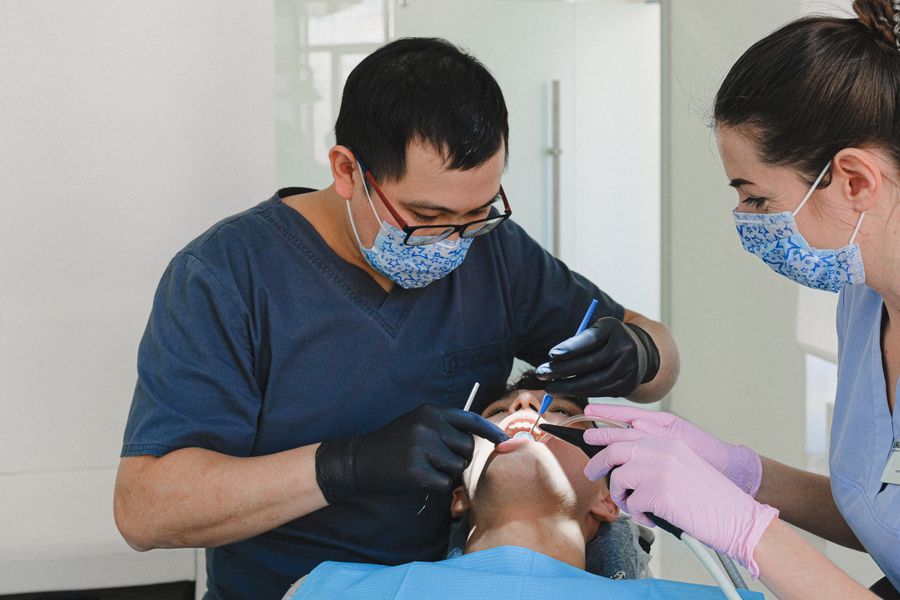
    Composite fillings rely on a bonding process.

    Read the full step

    Composite fillings rely on a bonding process. The tooth is prepared according to the restorative system being used, and keeping the area appropriately isolated and dry is important during placement.

  5. 05

    Build the Filling

    Composite material is placed and shaped to replace the missing tooth structure.

    Read the full step

    Composite material is placed and shaped to replace the missing tooth structure. For many restorations, the material is added in stages and hardened using a curing light. The dentist recreates the contours of the tooth rather than simply filling a hole with a flat surface.

  6. 06

    Check the Bite and Polish the Restoration

    Once the filling is complete, we check how the restored tooth meets the opposing teeth.

    Read the full step

    Once the filling is complete, we check how the restored tooth meets the opposing teeth. If the filling feels too high, it can make biting uncomfortable. The restoration is adjusted as necessary and polished so the surface feels smooth.

LPS Dental Chicago dentists

Meet The LPS Dental Team

Top Chicago Dentists

LPS Dental's roots in Chicago go back to 1999, when Dr. Jack Manikowski opened Lincoln Park Smiles.

Read more about the team

Today, LPS Dental has three Chicago offices and a team whose experience extends across cosmetic, restorative, implant, periodontal, prosthodontic, and general dentistry.

  • Treatment planning that considers appearance, tooth structure, function, and long-term health together.

  • Dr. Jack Manikowski is a member of the American Academy of Cosmetic Dentistry.

  • Digital scanning and planning tools help us evaluate and communicate proposed treatment.

Meet Our Dentists
Real Patients, Real Results

People Love LPS Dental

Questions & Answers

Tooth-Colored Filling FAQ

It is normal to have questions before treatment. Here are some of the things patients often want to understand first.

A tooth-colored filling is a dental restoration made from composite resin. It is used to replace tooth structure lost to decay or selected areas of minor damage. Composite can be matched to the color of surrounding teeth, making the restoration less noticeable than a traditional silver-colored filling.

Yes, the terms composite filling, tooth-colored filling, white filling, and bonded filling are commonly used to describe this type of resin-based dental restoration.

Yes. Composite fillings can be used on both front and back teeth. Whether composite is appropriate for a particular back tooth depends on the size and location of the restoration, remaining tooth structure, moisture control during treatment, and the chewing forces involved.

No. Their natural appearance is an advantage, but composite fillings are restorative dental treatment. They repair areas of tooth structure damaged by cavities or other selected problems.

After the damaged area is prepared, the tooth surface is conditioned and a dental bonding system is applied. Composite resin is then placed, shaped, and hardened. The exact materials and steps vary according to the restorative system used by the dentist.

There is no guaranteed lifespan. The longevity of a composite filling depends on its size and location, bite forces, oral hygiene, cavity risk, grinding habits, and the amount of healthy tooth supporting it. All dental fillings can eventually need repair or replacement.

It can. A filling may loosen or fracture because of recurrent decay, heavy bite forces, tooth fracture, wear, or failure at the bond between the filling and tooth. If a filling comes out, avoid chewing heavily on the tooth and schedule an evaluation.

Temporary sensitivity can occur after a tooth has been restored. The tooth may react to cold, pressure, or chewing for a period of time, particularly when the cavity was deeper. If sensitivity is intense, persists, gets worse, or the tooth hurts without stimulation, let your dentist know.

Start Your Next Visit Today

Visit us in Lincoln Park, Downtown Chicago, or Norwood Park. The first appointment should leave you with a clearer picture of your dental health and what, if anything, needs to happen next.

  • Lincoln Park1701 N Sheffield Ave #101, Chicago, IL 60614312-337-1665
  • Downtown Chicago Loop30 N Michigan Ave #1520, Chicago, IL 60602312-236-9325
  • Norwood Park6315 N Milwaukee Ave #2, Chicago, IL 60646773-774-1493