


Monitor When Appropriate
More about this service
Not every finding requires immediate treatment. Areas that remain structurally sound and show a low risk of progression may sometimes be documented and monitored during future examinations.

Minimally invasive dentistry focuses on preserving healthy natural tooth structure whenever possible. At LPS Dental, treatment recommendations are based on how far a problem has progressed and what the tooth actually requires. Some areas can be monitored, while others may need a small restoration or more substantial support. The goal is always to provide appropriate treatment without removing or replacing healthy structure unnecessarily.
4.9 Overall Rating
Serving Chicago
Across Chicago
Trusted by Chicago — our associations, accreditations and partners.
What We Offer
Minimally invasive dentistry focuses on preserving healthy natural tooth structure whenever possible. At LPS Dental, treatment recommendations are based on how far a problem has progressed and what the tooth actually requires.

Not every finding requires immediate treatment. Areas that remain structurally sound and show a low risk of progression may sometimes be documented and monitored during future examinations.


Early mineral loss can sometimes be managed before a physical cavity develops. Fluoride, improved home care, dietary changes, and closer monitoring may help reduce the need for restorative treatment in appropriate cases. Learn More: https://www.lpsdental.com/cavity-prevention-chicago/

When a filling can reliably restore a tooth, there is no reason to prepare it for a more extensive restoration. Tooth-colored composite can often repair localized damage while preserving the surrounding healthy structure. Learn More: https://www.lpsdental.com/bonded-white-fillings-chicago/

A conservative approach does not mean avoiding crowns when a tooth genuinely needs additional protection. Extensive decay, fractures, or significant loss of structure may make a crown the most appropriate way to preserve the remaining tooth. Learn More: https://www.lpsdental.com/chicago-dental-crowns/

If you are not sure which treatment fits, start with an examination. Our dentists will explain the options that apply to your teeth.

If you are not sure which treatment fits, start with an examination. Our dentists will explain the options that apply to your teeth.
Comfort, Expertise, And Trust
Patient story from Lincoln Park Smiles
Tell us what you notice. The recommendation comes after we understand the problem.
Treatment should look like your smile, not a one-size-fits-all result.
We evaluate the health of the teeth and gums, existing restorations, tooth position, and bite before treatment.
We explain why something is recommended, what alternatives exist, and what treatment involves before you decide.
How It Works
The evaluation may include the teeth, gums, bite, and existing restorations. Dental imaging is used when additional information is needed to understand the condition beneath the surface.
Findings are evaluated according to their severity and risk of progression. Some areas may remain healthy, some may be appropriate to monitor, and others may require treatment.

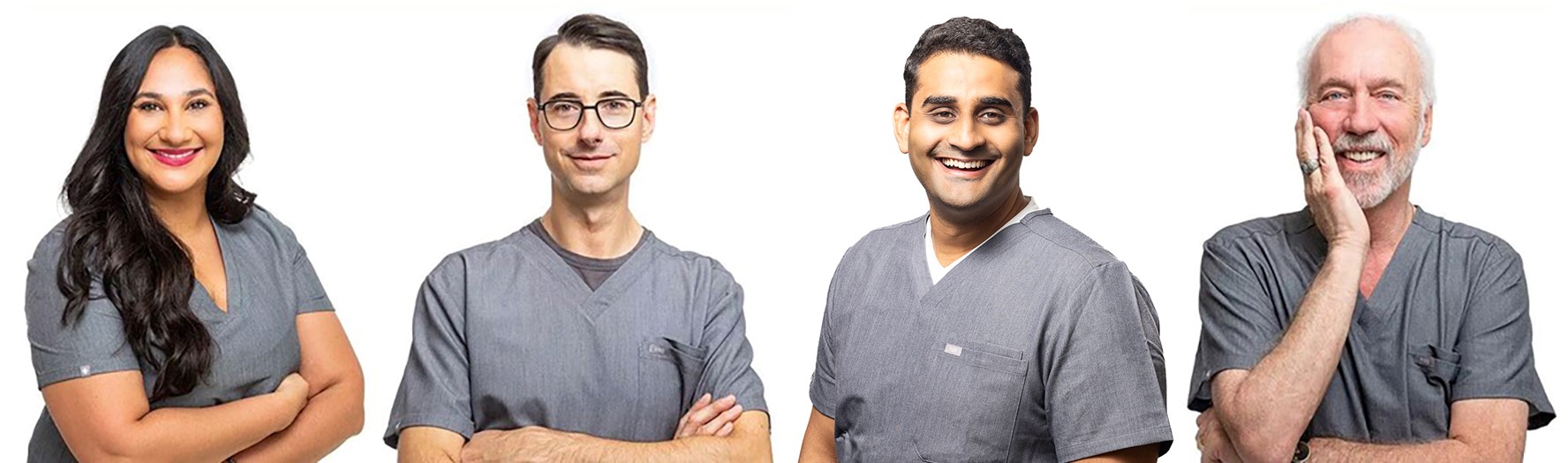
Meet The LPS Dental Team
LPS Dental's roots in Chicago go back to 1999, when Dr. Jack Manikowski opened Lincoln Park Smiles.
Today, LPS Dental has three Chicago offices and a team whose experience extends across cosmetic, restorative, implant, periodontal, prosthodontic, and general dentistry.
Treatment planning that considers appearance, tooth structure, function, and long-term health together.
Dr. Jack Manikowski is a member of the American Academy of Cosmetic Dentistry.
Digital scanning and planning tools help us evaluate and communicate proposed treatment.
It is normal to have questions before treatment. Here are some of the things patients often want to understand first.
Minimally invasive dentistry is an approach focused on preventing disease, identifying problems early, preserving healthy natural tissue, and using the least extensive treatment that can reasonably manage the condition.
Minimally invasive dentistry does not eliminate conventional dental preparation when it is necessary. Established cavities, fractures, and structural damage may still require removal of damaged tooth structure. The objective is to preserve as much healthy structure as practical during treatment.
Very early tooth decay may sometimes be managed before a physical cavity forms. Fluoride, improved home care, dietary changes, and monitoring may help stop early mineral loss in appropriate cases. Once the tooth structure has broken down into an established cavity, restorative treatment may be required.
A filling generally requires less tooth preparation than a crown, but it is not always the more appropriate treatment. A significantly weakened tooth may need additional coverage and support to reduce the risk of further fracture.
Existing dental work should be evaluated according to its condition rather than its age alone. Replacement may be appropriate when decay, fracture, deterioration, loss of fit, or another clinical problem is present.
Cosmetic treatment can often be planned conservatively. Depending on the concern, whitening, composite bonding, orthodontics, or minimal-prep veneers may provide improvement while preserving more natural tooth structure.
No-prep and minimal-prep veneers can be conservative cosmetic options for selected patients because they may require little or no enamel reduction. Candidacy depends on tooth position, shape, enamel, bite, and the type of cosmetic change being planned.
LPS Dental applies minimally invasive principles across preventive, general, restorative, and cosmetic care at our Lincoln Park, Downtown Chicago, and Norwood Park offices.
Visit us in Lincoln Park, Downtown Chicago, or Norwood Park. The first appointment should leave you with a clearer picture of your dental health and what, if anything, needs to happen next.