


Services / Dental Implants

Dental Implants in Chicago

Replace what is missing with a tooth that looks, feels, and functions like it belongs there.

Dental implants can replace one missing tooth, several teeth, or help support a more stable full-arch restoration. At LPS Dental, implant treatment is planned around more than filling a gap. We look at your bone, gums, bite, neighboring teeth, and the final restoration before deciding what makes sense, with implant consultations available in Lincoln Park, Downtown Chicago, and Norwood Park.

640+ Reviews

4.9 Overall Rating

Since 1999

Serving Chicago

3 Locations

Across Chicago

Trusted by Chicago — our associations, accreditations and partners.

What We Offer

Our Chicago Dental Implants Services

Dental implants can replace one missing tooth, several teeth, or help support a more stable full-arch restoration. At LPS Dental, implant treatment is planned around more than filling a gap.

Single-Tooth Dental Implants
01

Single-Tooth Dental Implants

When one tooth is missing, an implant can replace it without requiring the neighboring teeth to support the new tooth.

More about this service

When one tooth is missing, an implant can replace it without requiring the neighboring teeth to support the new tooth. The implant is placed in the jaw and eventually supports a custom dental crown. The visible crown is shaped and shaded to fit naturally between the teeth around it.

Learn More
Implants for Multiple Missing Teeth
02

Implants for Multiple Missing Teeth

Several missing teeth do not always require one implant for every tooth.

More about this service

Several missing teeth do not always require one implant for every tooth. Depending on the location and condition of your mouth, implants may be positioned to support an implant bridge that replaces multiple teeth together. The plan is based on where support is needed rather than simply counting the number of spaces.

Learn More
Implant-Supported Dentures
03

Implant-Supported Dentures

Traditional removable dentures rest on the gums.

More about this service

Traditional removable dentures rest on the gums. Dental implants can provide additional support and stability. For patients who struggle with a loose lower denture or want a more secure way to replace a full arch of teeth, an implant-supported restoration may be worth considering.

Learn More
Full-Mouth Dental Implants
04

Full-Mouth Dental Implants

Patients who have lost most or all of their teeth may be candidates for a full-arch implant approach.

More about this service

Patients who have lost most or all of their teeth may be candidates for a full-arch implant approach. Several implants can be used to support a larger restoration rather than replacing every tooth with its own individual implant. The number and position of implants, type of restoration, available bone, and whether any teeth can reasonably be saved all need to be evaluated first.

Learn More
Bone Grafting When Needed
05

Bone Grafting When Needed

An implant needs adequate bone around it for support.

More about this service

An implant needs adequate bone around it for support. If bone has been lost after an extraction, periodontal disease, or years without a tooth in the area, grafting may sometimes be recommended before or during implant treatment. Not every implant patient needs a bone graft. Imaging helps us determine what is actually present.

Learn More
Your Final Implant Restoration
06

Your Final Implant Restoration

The implant itself is only the foundation.

More about this service

The implant itself is only the foundation. What you eventually see and chew with may be an individual crown, an implant-supported bridge, or a larger implant-supported restoration. That final tooth design matters just as much as the surgical placement. Shape, bite, color, spacing, and how the restoration meets the gums are all part of the plan.

Learn More

Comfort, Expertise, And Trust

Why Choose LPS Dental For Dental Implants?

Patient story from Lincoln Park Smiles

01We Listen Before We RecommendTell us what you notice.

Tell us what you notice. The recommendation comes after we understand the problem.

02Natural Results MatterTreatment should look like your smile, not a one-size-fits-all result.

Treatment should look like your smile, not a one-size-fits-all result.

03We Look Beyond AppearanceWe evaluate the health of the teeth and gums, existing restorations, tooth position, and bite before treatment.

We evaluate the health of the teeth and gums, existing restorations, tooth position, and bite before treatment.

04You Can See and Understand the PlanWe explain why something is recommended, what alternatives exist, and what treatment involves before you decide.

We explain why something is recommended, what alternatives exist, and what treatment involves before you decide.

How It Works

What To Expect From Your Dental Implants Visit

  1. 01

    Examine the Area and Plan the Final Tooth

    We start by looking at the missing tooth or teeth, surrounding gums, bite, neighboring teeth, and available bone.

    Read the full step

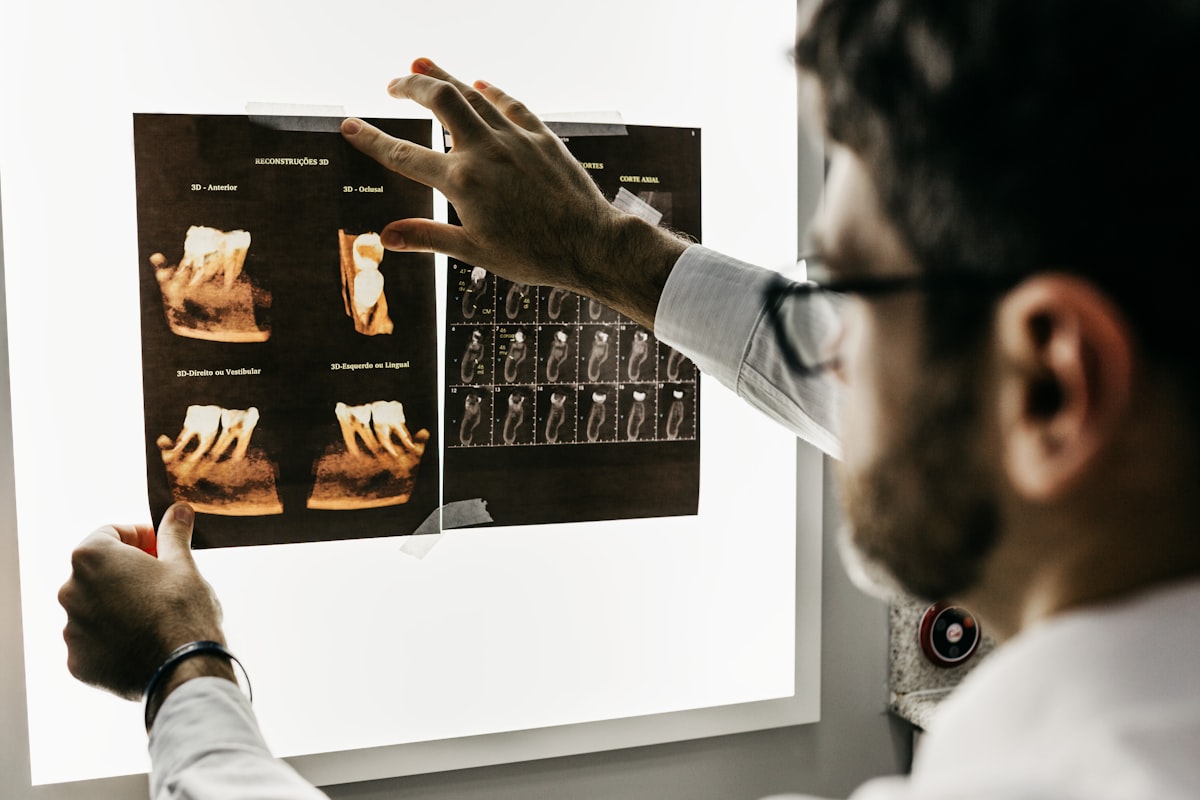
    We start by looking at the missing tooth or teeth, surrounding gums, bite, neighboring teeth, and available bone. Digital imaging and 3D information can help us evaluate anatomy that cannot be judged simply by looking in the mouth. We are already thinking about the final crown, bridge, or denture at this stage because implant position and final tooth position need to work together.

  2. 02

    Prepare the Site if Necessary

    Some patients are ready for implant placement.

    Read the full step

    Some patients are ready for implant placement. Others may first need a damaged tooth removed, periodontal disease treated, or additional bone developed in the area. There is no advantage in rushing an implant into a site that is not ready to support it properly.

  3. 03

    Place the Dental Implant

    The implant is positioned in the planned area of the jaw.

    Read the full step

    The implant is positioned in the planned area of the jaw. The exact procedure varies according to the location, amount of available bone, number of implants being placed, and whether other treatment is occurring at the same appointment. Comfort options and post-operative instructions are discussed before surgery.

  4. 04

    Allow the Implant to Heal

    The implant needs time to become stable within the surrounding bone.

    Read the full step

    The implant needs time to become stable within the surrounding bone. This healing process is called osseointegration. It does not happen overnight. Depending on the case, the implant may need several months of healing before it is ready for the final restoration. Temporary tooth replacement may be possible during this period depending on where the implant is located and the treatment plan.

  5. 05

    Complete the New Tooth

    Once the implant is ready, we move into the restorative phase.

    Read the full step

    Once the implant is ready, we move into the restorative phase. A single implant may receive a custom crown. Multiple implants may support a bridge. A larger number of missing teeth may require an implant-supported denture or full-arch restoration. This is where the implant begins to look like a tooth again.

  6. 06

    Maintain the Implant

    Implants do not develop cavities, but the tissues around them still need care.

    Read the full step

    Implants do not develop cavities, but the tissues around them still need care. Plaque, inflammation, gum disease, excessive bite forces, and other factors can cause problems around implant restorations. Daily cleaning and ongoing dental visits remain part of keeping the result healthy.

LPS Dental Chicago dentists

Meet The LPS Dental Team

Top Chicago Dentists

LPS Dental's roots in Chicago go back to 1999, when Dr. Jack Manikowski opened Lincoln Park Smiles.

Read more about the team

Today, LPS Dental has three Chicago offices and a team whose experience extends across cosmetic, restorative, implant, periodontal, prosthodontic, and general dentistry.

  • Treatment planning that considers appearance, tooth structure, function, and long-term health together.

  • Dr. Jack Manikowski is a member of the American Academy of Cosmetic Dentistry.

  • Digital scanning and planning tools help us evaluate and communicate proposed treatment.

Meet Our Dentists
Real Patients, Real Results

People Love LPS Dental

Questions & Answers

Dental Implant FAQ

It is normal to have questions before treatment. Here are some of the things patients often want to understand first.

A dental implant is a small post placed surgically into the jawbone to provide support for a replacement tooth or teeth. After the implant heals and becomes stable within the bone, it can support a dental crown, bridge, or implant-supported denture. The implant itself is the foundation. The part that looks like a tooth is the restoration placed above it.

A single-tooth implant restoration commonly involves three main components. The implant sits within the jaw. An abutment provides the connection above the implant, and a custom crown forms the visible replacement tooth. The exact components differ when implants support bridges or larger restorations.

Good candidates generally need healthy enough gums and bone to support treatment and should be medically able to heal after implant surgery. We also consider smoking, medications, chronic medical conditions, periodontal health, oral hygiene, and the forces that will be placed on the implant. When bone is limited, grafting may sometimes create additional treatment options.

There is no simple upper age limit. General health, oral health, bone condition, healing ability, and the expected benefit of treatment are more important than the number on your driver's license. An individual medical and dental evaluation is necessary.

Not necessarily. A bone graft may be recommended when there is not enough bone in the planned implant area to provide suitable support. Some patients have plenty of bone and do not need grafting. Others may need grafting before or at the time of implant placement. Imaging helps us determine which situation applies.

Osseointegration is the healing process in which the bone develops around the dental implant and stabilizes it within the jaw. This process takes time and is one of the reasons implant treatment often cannot be completed from beginning to end in a single appointment.

It varies substantially. A straightforward single implant may follow a different timeline from a case involving extraction, bone grafting, several implants, or a full-arch restoration. Healing after implant placement can take several months before the final restoration is completed. Your treatment plan should include an expected sequence and timeline before surgery.

Sometimes a temporary restoration can be placed at or near the time an implant is inserted. That is not appropriate for every implant. Bone quality, implant stability, location, bite forces, and the type of restoration all influence whether immediate loading is advisable. We would rather give an implant the healing time it needs than force a same-day timeline onto a case that is not suited for it.

Start Your Next Visit Today

You may need one implant. You may need several.

Read more

You may discover that a bridge or another treatment makes more sense. The first step is an exam, imaging, and a conversation about what you want the replacement to do for you. We will explain the condition of the area, the available options, the treatment sequence, and the expected cost before you decide how to move forward.

  • Lincoln Park1701 N Sheffield Ave #101, Chicago, IL 60614312-337-1665
  • Downtown Chicago Loop30 N Michigan Ave #1520, Chicago, IL 60602312-236-9325
  • Norwood Park6315 N Milwaukee Ave #2, Chicago, IL 60646773-774-1493